Friday, 4 October 2013

On going the distance (part 2)

It's past midnight on a Monday, and I'm talking to my boyfriend.  It's been over a week since we've last been able to talk - he's been on tour with his orchestra, and they didn't have internet or phone signal at his hotel.  But now he's on a bus to Venice, and thanks to a German phone borrowed from a friend, we are finally able to have a conversation without racking up astronomical long distance charges.

The last week has been difficult.  A series of missed calls, Tolstoy-novel-length texts, and desperate searches for wifi.  We have both felt the absence of our regular Skype chats.  And every time I send an email or a facebook message, it feels like sending a message out to sea - I have no idea when or if it will be received.


Sadly, he would never get to see that hilarious youtube clip...
I don't have a perfect relationship.  I don't even have a perfect long-distance relationship.  In the perfect long-distance relationship, we would have bottomless bank accounts so we could jet over to see each other every weekend.  We would have limitless access to internet and mobile phone networks, so that we could constantly stay in touch.  We would have near-identical schedules, so that it would be easy to find time to talk.

But nothing, as we know, is ever perfect.  Especially when it comes to relationships.

It's been over a year now since my relationship became long-distance.  In the year since I last wrote about it, a lot has happened.  I have learned things about myself and my boyfriend, and about relationships in general.  At times it has been challenging, hilarious, heartbreaking, ridiculous, inspiring, and joyful.  And I thought I'd take the time to share what I've observed and learned.

I always knew that I was going to miss my boyfriend.  I expected to feel sad and lonely when he wasn't around.  And I was right about that.  I always miss my boyfriend - it's a dull kind pain that's with me every day.  What I didn't expect was that I would get used to this pain, that I would stop noticing it.  What I didn't expect was that we would both get used to being apart, and this was a much bigger problem.

In a long-distance relationship, as you spend time apart from each other, you both become more independent.  I mean, of course you do.  You have to.  If you spent all your evenings at home pining for your other half, you'd be on the short track to clinical depression.  So you go out, you make new friends, you find new hobbies.  You get used to doing your own thing, following your own schedule.  And eventually you fall into a rhythm that works for you.  Which is great.  Until of course, your other half comes to visit.

Suddenly, everything changes again.  You can't just follow your own schedule anymore - there's another person to consider.  You've spent all this time filling up the big gaping hole they left behind, and now you have to fit them in again.  Of course, they were a part of your life when they were away too.  But there's a big difference between an scheduled hour's chat on Skype, and being together 24/7.


And then there's the jealousy.  Not romantic jealousy, but friendship jealousy.  I've struggled with this a few times on visits to Sweden.  You see, my boyfriend has this whole social life apart from me.  Of course he needs this social life, and I'm very happy he has it.  But when I come to visit, I can't help feeling a bit left out.  I can't catch up on all the bonhomie these people have shared.  These are people who can take him for granted, who get to hang out with him every day.  They share banter and dance tunes and drinks and inside jokes with him.  They probably even get to hug him more than I do.  How is it fair that he hugs his buddies more than his girlfriend?

At this point, I'm sure a lot of people would love to chime in and tell me that I'm fighting a losing battle.  That long-distance relationships never work.  Well, as my brother says, scratch any cynic and you'll find a wounded romantic.  In my experience, most of the nay-sayers out there seem to be hurt, embittered, or angry about a failed long-distance relationship in their past.  I have also been in unsuccessful long-distance relationships.  Nonetheless, I do think a long-distance relationship can work.  Maybe not for every couple.  Maybe not in any given set of circumstances.  But it can work.

I think a big key to making a long-distance relationship work is to fight the two romance-killers: routine and lack of communication.

I know you're probably sick to death of hearing how important communication is in a relationship.  Well I hate to break it to you, but it's true.  Almost any problem in a relationship is surmountable - if you talk about it openly.  If you don't talk about the problem, it will only get bigger, breeding resentment and misunderstanding.

Now I know what you're thinking.  It's really, really hard to talk about relationship problems when you hardly ever see each other.  The problem is that you want every visit to be nice.  You want to make the most of your time together, and leave with lots of happy idyllic memories.  Memories of strolling down the street hand-in-hand, visiting the zoo, or having a snowball fight.  The kinds of things couples do in a romantic comedy montage.  You don't want to leave with memories of having long, emotional discussions about your relationship problems.  And so it's very tempting to just stick on a smile and pretend that everything is fine.

Yes, everything is just wonderful!

But trust me on this one.  It is always better, if possible, to talk about these things face-to-face.  No technology in your way.  No sketchy wifi connections or crackling phones.  Just the two of you, looking each other in the eye and speaking honestly.

It's also important to communicate with each other about the relationship as a whole.  What kind of relationship is this?  Where is it going?  What do you both want?  You need to be on the same page about these things.  Otherwise you'll discover - far too late - that you are in two completely different relationships.

"Monogamy?!  I thought you said mahogany!"
Which brings us to the second romance killer: routine.  Yes, things can get routine, even when your significant other lives on another continent.  Maybe it's not the routine of ordering in Chinese every Friday, or quibbling over who makes the coffee every morning.  But even routines like talking on Skype every night can put your relationship in a rut.  You start to think of your conversations as an obligation.  You start to let your attention wander, and do things like checking facebook mid-conversation.

I will never forget a particularly cathartic conversation in which my boyfriend and I finally told each other how sick we were of talking on Skype.  Not that there's anything wrong with Skype per se.  It's just that after a while, anything can get boring.  And after all, what is natural about sitting down to speak to each other at an appointed hour, for an appointed period of time?  This should be a relationship, not a business meeting!

So what did we do?  We took away the pressure of talking on Skype all the time.  Instead, we tried talking more through instant messaging, spontaneously, when we felt like it.  And we got creative.  We looked for other ways to reach out to each other.  Whether it was writing romantic texts, sending silly photos, or composing the odd limerick, we found millions of little ways to say "thinking of you".  One of my latest discoveries?  You can send a video message up to 3 minutes long over Skype.  It's a great way to send a message when the other person is offline.  And if you happen to be under the influence of alcohol whilst recording your message, I assure you that hilarity will ensue. 

I am not at all speaking from personal experience.  Nope.  Not me.
Some people will tell you that a long-distance relationship is not a real relationship.  It's just a delusion, a fantasy.  In a way, these people are right.  A long-distance relationship can never be the same as a real relationship.  There is no replacement for being together in person.  Of course, your feelings for each other may be very powerful and very real.  But most of the time, your relationship is more like a promise of a relationship.  A promise of what will be the next time you're together.  This is why it's important to always look ahead.  Plan your next visit.  Get excited about it.  And more importantly, have an end point.  Know that at some point, one or both of you will move so you can be together.

Like any relationship, a long-distance relationship takes work.  You can't just sit back and expect things to run smoothly.  The Beatles say that love is all you need, but I don't think it's that simple.  You also need honesty, trust, kindness, and respect.  You need to never take each other for granted.  Keep showing each other how you feel, whether with romantic surprises or small everyday gestures.  And you need to keep the lines of communication open - if you're not happy, for God's sakes talk about it!

Am I a hopeless romantic for believing in long-distance relationships?  Probably, yes.  But so what if I am?  I'd rather be a hopeless romantic than just plain hopeless.  Call me crazy, call me naive, call me deluded.  But I think that when two people really love each other, and they really want to make it work, anything is possible.

Thursday, 19 September 2013

On learning a foreign language...

I am privileged.  And no, I don't just mean in the obvious ways (white, middle-class, born in a first-world country)..  I mean I'm privileged as a native English speaker.

English is the second most widely-spoken language in the world.  As an English speaker, when travelling, I can almost definitely guarantee that people will be able to speak English to me.  In fact if I try to speak their language, they'll usually switch to English right away.  Millions of people around the globe learn English in school or list it as their country's official language.  So for the most part, we native English speakers have it easy.  We're fluent in a language that everyone else is trying to learn.

I can't even count the number of times I've rolled my eyes, got impatient, or even laughed at people as they struggle with my language.  How could they be so slow?  Why were they making such silly mistakes?  I've spoken English since I was small, and heard it every day since I was born.  Ever since I've been able to, I have read and written voraciously in English.  I couldn't understand how something that seemed so natural to me could be so difficult for other people.

Now I'm in Germany, and the shoe, as they say, is on the other foot.

...Oh.
Of course I know that it's hard to learn another language.  It's not like I think it's easy or anything.  I've studied French, Russian, Italian, and German at various points of my life, and I've seen how challenging it is.  But it wasn't until now that I fully appreciated the difficulty of functioning in another language every day.  And let me tell you, it is HARD.

When you're speaking a foreign language, your IQ dives down about 50 points.  Suddenly you feel very slow and stupid.  Things you take for granted disappear.  You can't express yourself eloquently, or even at all.  And you're always asking people to slow down or repeat themselves.

It's not just your intelligence that you lose.  You lose your sense of humour.  Your language is just not sophisticated enough for jokes.  In English I adore wordplay, and I'm always making people groan with my puns.  But in German?  Not a chance.  The only way I could make someone laugh or groan in German is by making a stupid mistake (although to be fair, that happens pretty often).

I can't understand jokes either.  I was in rehearsals in Stuttgart last week, and our conductor enjoyed telling us long elaborate stories.  These stories would always finish with everyone laughing uproariously - except me.  I looked around and chuckled politely, wondering what (apparently hilarious) details I had missed out on.

 
Losing your native language means losing social skills.  I'm not the most outgoing person in the world, but I'm not a shy little wallflower either.  In Germany I'm as shy as a mouse!  I find it extremely difficult to work up the nerve to make new friends.  The prospect of trying to make conversation with people in German makes me so nervous, I would rather avoid it completely.
 
You know how Spanish speakers like to hang out with other Spanish speakers, French speakers with other French speakers, and so on?  I never understood that until now.  I thought they were being clique-y and excluding other people.  But it has nothing to do with excluding people - it's just their way of relaxing.  The truth is, functioning all day in a foreign language is exhausting.  Speaking your own language with other native speakers is a huge relief.  It's like taking a warm bath after walking in the rain.

Hey, however you enjoy your bath is your own business.
Of course, speaking a foreign language doesn't actually make you stupid.  If anything you have to be very clever.  You may not understand everything someone is saying, but you can piece it together from what you do know - the context, the words you recognise, and other people's reactions.  And you may not know the most sophisticated way to say something, but you can figure out how to make yourself understood with the limited vocabulary you do have.  Every conversation is a bit like a puzzle.  You use what you know to figure out the rest.

Because of this, it's always, always easier to talk to someone in person.  When you're face-to-face, you have more non-verbal tools to rely on.  You can watch someone's facial expression, hand gestures, tone of voice, and of course...


Talking on the phone, on the other hand, is a total minefield.  All you have to go by is a disembodied voice.  And once you factor in bad reception and background noise, it can be practically impossible to know what's going on.  I get extremely nervous about talking on the phone in German.  Every time I dial a number, I'm sure it's going to end in disaster.


"Oh God!  Hallo, uh.. ich bin...."

Nevertheless.  I do feel that I'm making some progress on my German - way more progress than I ever would have elsewhere.  Living in Cologne forces me to practise constantly, every single day.  And while I do find opportunities to hang out with English-speaking friends, I try not to stay in my comfort zone too much.  I've found a fantastic website called Tandem Partners where I can find a German person who wants to improve their English and we can meet up and teach each other.  This way I can work on my German with a native speaker and I can fit our meetings around my schedule.  It also helps that my landlady doesn't speak English - I have no choice but to speak German with her.

Every time I manage to do another transaction in German, it feels like a small victory, and I gain a bit more confidence.  There are still days when I'm tired or confused or daydreaming, and when someone starts speaking German to me I just tune out.  And when people speak too quickly, it's like being attacked by a blast of words.  I get completely overwhelmed.

"Nnnneurghhh so.. much... German..."
However, bit by bit, I'm understanding more and getting braver about speaking.  Sometimes I really surprise myself with the progress I'm making.  When people first told me about "passive learning" I didn't think it could possibly be true.  That you could just sit back and let a language wash over you, and it would magically go into your brain?  Like some kind of language osmosis??  It just seemed too easy.  Surely I had to work hard and study actively if I wanted to learn a language!  But while studying does help, passive learning really works very well.  Just being exposed to German, hearing it on the TV every day, speaking it with salesmen and barristas and librarians and landladies, I am getting used to the vocabulary and sentence structure, and everything is becoming easier and more natural.

In the end, a lot of it comes down to confidence.  You have to fake it until you make it.  My friend often reminds me "you don't always have to worry about getting everything perfect".  And he's right.  I often get nervous about speaking to someone because I think I'll make mistakes in my grammar or get lost for words.  But if everyone worried about this when they tried to speak English to me, they would hardly speak at all!  The important thing is to be able to communicate, and trying is better than staying silent.  I find that if I have a clear intention and speak with conviction, I can usually get my point across - even if it isn't perfectly phrased.  If you believe you can speak the language, you can speak the language.

I still have a LOT to learn with my German.  It will take a long time for the rules of grammar to become automatic, and perhaps I'll never get over my fear of phones.  But Rome wasn't conquered in a day.  It's the small victories that count, and every day I'm learning new words and making more interactions "auf Deutsch".  Perhaps it will never feel completely natural.  But after years of playing on my home turf, I guess it's about time I felt uncomfortable.  Now I know how the rest of the world feels.


Tuesday, 10 September 2013

On finding your own way...

Life after graduation.  The great beyond.  How do we visualise it?  And how does reality measure up?  If you're anything like me, as a young singer you pictured some kind of fairytale ending, where all of your hard work and diligence would be rewarded with a contract, an agent, or a coveted place in a prestigious young artist programme.  You thought that if you worked hard enough, did all the right things, auditioned for all the right people, eventually someone would hand you a career on a silver platter.

"Your career, ma'am - careful, it's piping hot"
As an undergrad student, I used to look at singers in the opera school with great reverence.  I heard their glorious voices and I expected great things of them.  I was often shocked and disappointed when they didn't live up to my expectations.  "What do you mean you're still living with your parents," I might say, "aren't you supposed to be singing at the Met by now?"  I remember seeing older singers, singers with masters degrees and years of training, singers with heaps of talent and ambition - and they were still struggling to survive.  Secretly I thought to myself, they must be doing something wrong.  That won't be me.

As the years rolled by, I lost some of my high hopes and naïveté.  I saw how competitive it was in the music world.  I learned that it took most people several years to build a career, and that even the most talented singer might struggle just to make a living.  And yet, in my heart of hearts, I still hoped that I would be different.  I would be special.

I think that deep down inside, I believed the world was a fair and logical place.  If you put in enough work, you reap the rewards - simple.  And so as I began my year at the opera studio, I didn't worry too much about the future.  I would audition for as many things as possible, and surely at one point someone would give me an obvious answer.  Someone would offer me an opportunity, and my future would be all mapped out.

"Follow me - your career goes that way!"
But the truth is, for most of us it's not so straightforward.  Yes, there are people who win contracts right out of school and transition smoothly into a singing career.  But those people are the exception to the rule.  Most of us finish school with a blank page and no idea how to fill it.  We have to find our own way.

It was around springtime this year when I realised that no one was going to offer me any easy answers.  I hadn't won a place in any young artist programmes, and no agents or opera companies had signed me on.  The future was a big blank.  I was all by myself.

My immediate reaction was panic and despair.  I couldn't believe that after all my hard work this year, all the progress I had made on my voice and my acting, nobody was going to scoop me up and take care of me.  How was I going to make a living?  Where was I going to live?  What was the next step?  How would I know if I was doing the right thing?

I'm not so good at making decisions.
Nonetheless, bit by bit, I started to ask myself some questions.  What kind of music did I want to sing?  Who did I want to sing it with?  What kind of life did I want to have?  And eventually the answer became clear to me.  In fact, it had been staring me in the face the whole time.  I wanted to move to Germany.

I have been thinking about moving to Germany for a long time.  And yet I've always been afraid to take the leap.  Perhaps because the prospect of a foreign language daunted me.  Perhaps because it seemed unoriginal - so many other young singers had done it before me.  Or perhaps because I had heard horror stories of singers arriving in Germany full of hopes and dreams, only to leave a few months later with an empty wallet and their tails between their legs.

But I had a few advantages over those singers in the horror stories.  First of all, I already knew some German.  Secondly - miraculously - one of my auditions this year had actually paid off, and I had some choir work lined up in Stuttgart.  It wasn't much, but it would pay the rent, which was a good start.

After ordering a refresher audio course online (I hadn't studied any German since undergrad, which was - *cringe* - almost 10 years ago) I started thinking about where exactly in Germany I would live.  Eventually I settled on Cologne.

Why Cologne?  It wasn't exactly a scientifically calculated choice.  I could have easily decided to move to any German city.  But I did consider a few factors in my decision: cost of living, accessibility, and proximity to Stuttgart.  Cologne is close to 3 major airports, and is only a few hours away from Stuttgart by train.  It's also pretty close to Gent, meaning it would be easy to come back to Belgium for work or visiting friends.  Compared to most major German cities, it's not an expensive place to live.  And, most helpful of all, I already had a couple of friends living there.  In other words, I wouldn't be completely alone when I arrived.

"Hello?..... Anybody there???"
It's a scary prospect, this move to Cologne.  I've moved country before (twice), but both times I was landing safe and sound in a postgraduate course, where I would have a readymade group of peers and a schedule of classes to follow.  This time, apart from the bit of choir work, I have no idea what will happen in the next few months.  My only plan is to find a flat, take German classes, and start auditioning.  The future is one big question mark.  Anything could happen.

And yet, there's something thrilling about this question mark.  It's a blank canvas which I have the power to fill however I like.  I don't have to follow someone else's path.  I can make a new one.  I'm my own boss, in control of my own destiny.

I know these next few months will be scary, difficult, confusing, and often lonely.  But they are also an opportunity to make my own career, in my own way, tailored to a shape and size that suits me.

"Yep, this career will fit my voice perfectly."
So often we singers are seduced by the career paths which have been prescribed to us.  We pressure ourselves to get into this opera school or that young artist programme, and we beat ourselves up when we don't.  We never seem to stop and think, is this really good for me, or is it just what I've been told is good for me?  What if other people's idea of success is not your true calling?  What if there are other ways, other paths, which might be better for you, which might ultimately make you happier?  You'll never find out unless you look.

I have many friends whose career paths don't fit into the preconceived notion of a budding young opera star.  They are successful freelance singers, and so much more.  They are educators, directors, administrators, writers, conductors, coaches, and founders of brand new ensembles and opera companies.  Are they living the life they envisioned for themselves?  No.  They are living something far more interesting than they ever could have imagined.

Life after graduation is hard.  Whatever our dreams are, however hard we work for them, most of us don't transfer seamlessly into our ideal career.  But what we do achieve can be so much more exciting.  With creativity, determination, resourcefulness and vision, we forge ahead.  We find our own path, and we're often delighted to discover where it leads.

Here I am, foot poised, about to start out on my own path.  And I can't wait to find out what comes next.


Thursday, 29 August 2013

On surviving the summer...

Summertime and the living is… easy?  I wouldn’t be so sure.  For the freelance musician, summer can be a dead time.  Orchestras, ballet and opera companies finish their seasons, and most students go on holiday.  You could go on holiday yourself, but without a fulltime salary that holiday won't last very long.  You need some income to survive.  So what do you do?  How do you cross this virtual gig desert?

Must... get to.. September...
Summer is always a tricky time for musicians - even when you’re a student.  Most students spend their summers hanging at the beach, or working a boring retail job, or melting into their sofa watching reruns of Family Guy.  But music students are more dedicated than that.  As classes end, we see the entirety of the summer stretching out between us and the start of the next school year, and we realise we have two options: stay locked up in a practice room for 2 months, or find an opportunity somewhere for further training.  Most of us choose the second option.

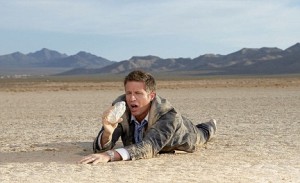
Although, this man spent three months in a practice room with no social contact, and he looks perfectly well-adjusted...
I remember as a student in Toronto, it was only a few weeks into the winter semester before I started hearing the dreaded question: “which summer programmes are you applying for?”  Summer programmes are a booming business, making money off of music students everywhere.  You can find a course in anything from baroque chamber music to contemporary opera.  Some courses may offer scholarships or cover your expenses.  Most come with a price tag.

If you want to improve your ensemble skills, you can also spend the summer in a youth orchestra or a youth choir.  Some of these organisations pay their musicians.  But many of them require a tuition fee – especially if their definition of "youth" leans toward the younger side.
So what happens to the young musician with no money to burn?  How can we gain important skills and experience without breaking the bank, or slowly going crazy in the confines of the practice room?  Enter the summer music festival.

Many summer music festivals, particularly in Germany, are looking for cheap labour.  And they find the answer in young musicians.  Here’s the deal.  You spend the festival singing in their choir or playing in their orchestra, gaining professional experience and learning new repertoire.  For the duration of the festival, you are completely taken care of – travel, meals, accommodation, and the odd free drink or two.  If you're lucky, you may also receive a small scholarship or a per diem.  In exchange?  Well, they pretty much own you.

"My real name is Ted, but for now you should call me 'Sponsored by Lufthansa'!"

As I’ve mentioned before, I used to spend every summer singing in a festival in Stuttgart.  It was my introduction to Germany – and to hundreds of friends from around the world.  In the last few years I’ve been too busy to participate in any summer festivals.  But this year I found myself at a loose end.  I was just finishing my opera course and about to embark on a freelance career – with no work in sight until September.  I couldn’t hang around Belgium practising all summer: first of all it would be incredibly boring, and secondly I wouldn’t be able to afford rent.  So I was delighted when a festival choir asked me to participate for 6 weeks.  They offered a scholarship, plus food and accommodation for the duration of the festival – but more importantly, I would be able to save a month’s rent by subletting my flat while I was away.  My summer was sorted!

WOOHOO!!!!
So in July I packed my bags and headed to northern Germany.  The festival I was singing for was founded by a famous composer and conductor, and its alumni often go on to win top orchestra jobs.  The festival choir has only been around for 10 years, so it’s not as prestigious or well-known as the orchestra.  But there is a very high standard of singing, as the choir director auditions emerging artists from around the globe.  We were a choir full of soloists: an interesting concept indeed, and with so many strong voices and personalities, there were bound to be some sparks flying.

Working in a summer festival is a surreal experience.  Basically, it feels like summer camp for musicians.  If that sounds like fun to you, I might suggest you get your head checked.  Seriously though, it is very intense and a lot of fun.  For the duration of the festival, you form a small(ish) community with several other musicians from around the world.  You rehearse together, eat together, sleep together, and party together.  Unlike the professional world, there are no days off.  Every day you are working with the same group of colleagues.
It’s an island, a world unto itself.  In a way this feels lovely, like a break from the normal adult world.  No bills to pay, no groceries to buy, no errands to run.  Everything is taken care of, from your bus to the venue to your water bottles for rehearsal. 

No, actually.  We had a ridiculous amount of water provided by sponsors.
But at times it feels isolated.  You're likely to be put up in a college residence in the countryside – idyllic surroundings, but miles from civilisation.  A simple errand like fetching something from the pharmacy can become a major trek.  And then there’s the lack of independence.  On the one hand, someone else is making all of your meals.  But on the other hand, someone else is making all of your meals.  You have no control over what you’re eating for lunch, or what time you eat it.

My middle school music teacher used to have this expression, “fat dumb and happy”.  This is a perfect expression for what can happen to you at a summer festival.  After a while, you get lulled into a false sense of security.  You follow the schedule every day, and you start to coast.  You stop thinking about life after the festival.  You might stop working on your technique and sending out CVs.  Even basic maintenance work, like warming up every morning, can go out of the window.

"Warm up?  Nah, I'm gonna take another post-breakfast nap.."
As for the “fat” part?  Well, let’s just say that 6 weeks of cafeteria meals, late-night eating and post-concert drinks are not kind to the waistline.  After being very well fed - and well-watered - we all gained a few kilos.

While summer festivals take very good care of you, the schedule can be relentless.  After a while, it stops feeling like summer camp and starts to feel more like boot camp. Eat, sleep, sing, rinse and repeat.   In my entire 6 weeks of the festival, I had two days off.  The first one was right after we arrived, and the second was… well to be honest I don’t remember anything about that day because I spent it being hungover in bed.

I was very sensible about taking care of myself and getting to bed early (except perhaps for the night that resulted in that hangover) but despite my best efforts, by the end of the festival I was completely run down.  I had a nasty cold that wouldn’t go away and my voice was barely there. 
Phew!  Time for a rest.
So what does it all add up to?  This marathon of singing, partying, and travelling?  First of all, there is the music.  In this festival, amongst other things, I got to sing in Mahler’s 2nd symphony with Christoph Eschenbach conducting, perform Carmina Burana for an arena of thousands, and work with composer/conductor Eric Whitacre.  I also got to sing in beautiful concert halls in Lübeck, Hamburg, and Berlin.

But beyond the music, there's the people.  This summer I met so many friends from around the world - amazing people who I’ll never forget.  Like the Nigerian tenor with a musical laugh, or the Estonian mezzo with a talent for elaborate hairstyles.  The Armenian soprano with a golden high C, and the Lithuanian baritone with a passion for beatboxing.  Old friends from Scotland with new banter, new friends from Brazil who taught me to samba, and three girls from Dublin who really knew how to party.  Together we shared inside jokes, nights on the dance floor, bottles of wine, long bus rides, and beautiful musical moments.
Singing in the festival has been an intense experience – it's been beautiful, crazy, inspiring, exhausting, and most of all unforgettable.  As I recuperate from the last 6 weeks and recover my voice (and hopefully my former dress size!) I know I will always carry this summer with me.  I will never forget the wonderful people I met, or the music that brought us together.

Sunday, 23 June 2013

On getting creative...

I have a theory.  Well, it's not so much a theory as a commonly accepted idea.  The idea is this: we all start off as creative children.  But as we grow up, our creativity is slowly beaten out of us.  We are told what is right and what is wrong.  What is normal and what is weird.  What is tasteful and what is trashy.  What is acceptable and what is embarrassing.  We are hit over the head, consistently and brutally, with these rules and conventions.  Slowly they begin to seep into our subconscious, until we know no other way to function.  We follow the rules we have been taught.  We do not act until authority tells us how to act.


I do not believe this is simply something that adults do to us.  I believe we do it to each other as well.  As we reach adolescence, we develop ideas about "cool" and "uncool".  Peer pressure becomes a tyrannical force.  Our freedom of expression is suddenly inhibited by a painful self-consciousness.

I was a creative child.  I loved to paint, write poetry, sing, tell stories.  I remember the sense of pride and satisfaction I used to feel about each of my creations.  The way I used to read aloud in class with dramatic expression, making funny voices for each of the characters.  I was fearless and free.  And then adolescence set in.

Suddenly, I was aware of being judged.  By teachers' grades, yes, but also by other kids' opinions.  I realised that what I was doing could be seen as "lame" or "uncool".  But it wasn't only that.  Every time I created something or performed to an audience, I was putting myself out there.  Not just my creation or my performance, but my entire self.  Like a prisoner in the lions' den, I was exposing every inch of myself to a potentially vicious attack.  I will never forget a time, in sixth grade, when I told some classmates I would be performing in the talent show.  I was excited to sing in front of an audience, but all they could see was an overweight eleven-year-old inviting their judgement.  "YOU're going in the talent show?" they said, "what are you going to do, EAT??"

"You're not an artist, you're just a fat kid!"
These are the kinds of put-downs we all experience growing up.  And we come out of it feeling closed-up and afraid.  Cowering in the corner, following the rules, keeping our thoughts safely within the box.  This is how we lose our creativity.

I'm painting a pretty bleak picture here, and of course it's not that bad.  Not everyone puts us down and stifles our creativity.  There are the good friends who encourage us to be artists, and there are the good teachers who nurture our sense of innovation.  But for the most part, I really do believe that we lose our creativity as we grow up.  And many of us spend our entire adulthood trying to get it back.

Last week I had an audition for a contemporary music theatre project.  So far so good - I've performed lots of contemporary music, and I'm no stranger to atonality and extended technique.  The problem was, they wanted me to improvise in the audition.

Now, I haven't improvised anything since high school jazz choir.  Amongst my peers, I was often the only one brave enough to try my hand at scatting.  Well, I say I was brave, but in fact I was always terrified.  I have very clear memories of standing onstage, my mic trembling in my hand, my face turning a deep shade of magenta, as I came up with some random syllables on notes that fit with the rhythm and the bass line.

"Scoobidy-bop... bee-dop.. dah??"
But this was something completely different.  There would be no rhythm or bass line in the audition.  They wanted me to make something up on the spot, all by myself!  And there were no rules or structure to guide me.  I could do anything, absolutely anything.  The canvas was completely blank - a terrifying prospect.

Luckily, I had a friend at the opera studio who was more than willing to help.  Alexey is a baritone who has done several workshops and masterclasses in improvisation, and he's an enthusiastic devotee of contemporary music.  He agreed to meet with me every day to help me learn how to improvise.

We began slowly, improvising together in simple games and exercises.  At first we tried humming the same note and taking turns to change pitch.  Then we tried repeating a cycle of notes, called a "loop" and taking turns to improvise over the loop.  This felt similar to the type of improvisation I had done in jazz choir.  Gradually we did more challenging exercises together and began to really communicate, responding to each other's melodic ideas and harmonic shifts.  It was a great exercise in listening.  After a while we could almost anticipate what the other person might do next.

But now it was time to take off the training wheels...

Wheeee!!!!!!!!
Now I had to learn to improvise alone, without the influence of another musician's ideas.  Again, I found myself overwhelmed by the idea of the blank canvas.  It was too much freedom to handle and I found myself freezing up.  Knowing that I could do everything, I did nothing.

I was also held back by self-consciousness.  I'm only accustomed to performing alone when there is a score to follow.  I can feel confident in this situation because I've prepared the music.  But there is no way to prepare for improvisation.  You have to perform freely, in the moment.  There is no composer to hide behind - it's just you and your instrument.

I told Alexey that it felt like there were two sides of myself fighting each other.  There was this crazy creative side who wanted to be free - and there was this strict, shy side that wanted to play by the rules.  He suggested that I could do an improvisation about this conflict.  So I began singing, and I introduced two musical ideas: one rigid, timid and rhythmical, the other crazy, impulsive and free.  I alternated between the two, envisioning a confrontation and a battle.  Finally, the music became more fluent and colourful.  I let the creative side win.

As we worked, I realised that I found it easier to improvise if I had an image or a story in mind to guide me.  So I tried "painting" other pictures with my voice.  Once, I improvised the story of a cat I always see outside my window.  This cat likes to stare at me from the neighbours' roof.  Sometimes I try to be friendly and wave hello to him.  But being cautious, as most cats are, he hides.  Then he slowly comes back, peering at me suspiciously...

I'm not sure about you...
Eventually I became bolder in my improvisation and began to take more risks.  Alexey encouraged me to explore thousands of sounds and effects.  He pushed me to try out as many different ideas as possible.  We played a game where every time he clapped his hands, I had to change to a different idea.  It was really hard, but it definitely helped me to keep the creative juices flowing.  The aim was to sing freely and intuitively, not to overthink anything.  If I stayed for too long on one musical idea, I might start thinking too much and get stuck.

By the time I arrived at my audition, I felt I had opened up a lot.  I had made all kinds of crazy sounds in the practice room, and I felt confident that I could improvise something interesting in front of the audition panel.  But an audition room is very different from a practice room, and it's always hard to perform under pressure.  When it came down to it, I didn't go nearly as far with my improvisation as I had in my practice sessions over the last few days.  I came up with a melody or two, I experimented a bit with vibrato and vowels, but overall I played it pretty safe.  Afterwards, I was disappointed in myself.  I couldn't stop thinking of interesting things which I could have done in the improvisation, and which I hadn't.  I was sure my improvisation had been really boring.  I walked home feeling like this...

*sad Charlie Brown music*
But the funny thing is, those interesting ideas kept coming to me.  It was like I had opened the floodgates, and now I couldn't stop creating.  I found myself coming up with little ditties in my head all the time.  Some were silly, some were annoying, and some were kind of good.  The difference was that I had stopped blocking myself.  I no longer worried so much about how good or bad my ideas might be.  I just let them flow.

In time, I realised that I was being far too hard on myself about the audition.  It didn't matter how well or badly I had improvised for the panel - the fact was that I had done it!  Before I did all that work with Alexey, I probably would have been too scared to improvise anything at all.  Now I was brave enough to create something in front of an audience and not worry about looking stupid.  For someone who always worries about looking stupid, that was a pretty big step to take.

We are all born creative, and then we learn to judge and fear.  But our creativity never leaves us completely.  It's still there, waiting in the corner, hoping to coaxed out and brought back to life.  So stop listening to those teachers who want you to conform.  Stop listening to those kids who tease you for being different.  Let yourself go and rediscover your creativity.

Monday, 17 June 2013

Being Romy: Ich bin so müde...

And just like that, it's all over.  After six weeks of rehearsals and four performances, it's time to say goodbye to Romy Schneider.

The last few weeks have flashed by in a blur.  As we got closer to opening night, I did a lot of last-minute research.  I spent hours with Romy's diaries and a German-English dictionary.  I read about her break-up with Alain Delon, her break-through with the director Luchino Visconti, her tireless filming schedules.  I watched more films, including Orson Wells' The Trial and the four-hour epic Ludwig - in which Romy played a very different kind of Empress Sissi under Visconti's direction.  The closer we got to the first performance, the more desperately I tried to get inside Romy's head and understand her completely.

Romy playing Empress Elisabeth of Austria ("Sissi") in Ludwig, 1972
We worked hard in the run-up to the shows, and we also had a lot of fun.  I was VERY excited about the costumes - maybe it's because I watch too much Mad Men, or I spend too much time browsing vintage stores, but I just loooove this kind of thing.  The day I saw my 60s housewife dress, I literally screamed.  The day the hairstylist arrived with her hairspray and rollers - well, I practically had an embolism.  From the rollers to the petticoats to the liquid eyeliner, I loved getting dressed up as Yellow Romy.  It was basically my idea of fashion heaven.

I mmmmay have started wearing a lot of headbands after this production...
Personally, my favourite part of the show was a strong idea introduced by the director.  Inspired by one of Green Romy's lines in the third act - "Je ne veux plus faire de l'art, je veux faire de la confiture" - the director decided that I would have a bowl of strawberries.  As I was playing the role of the perfect housewife and telling the press how happy I was in my marriage, I would slowly begin to take strawberries and crush them on the table.

There was a lot of discussion about what the strawberries symbolised.  Some people said the strawberries were life.  Others said that they were love.  For me, the strawberries expressed the truth.  Crushing the strawberries gave me a physical outlet for my feelings of anger and frustration: while I smiled and sang about the virtues of domestic life, my hands were telling the real story.

Also, FYI, squishing strawberries is a lot of fun.  Seriously, you should try it sometime.
The strawberries made an enormous mess, and, as the audience remarked, they also had a powerful smell.  Not necessarily unpleasant, just... very fragrant.  I don't think I'll ever be able to see strawberries the same way after this opera.  I squished them in my hands, I smeared them onto people's clothes, I danced on them, and I even fell on top of them.  By the end of the show I was completely covered in pink mush.  Many damp towels were needed.  I did not envy the costume lady, who was in charge of getting rid of the stains in my clothes every night.

So... many... strawberries...
As I mentioned in my last post, by the end of the show I was not only covered in strawberries, but I was also half naked.  At the end of the second act, I had to drink lots of liquor (ice tea, actually) and dance around like crazy while people stripped me - all of this while singing.  I don't have any pictures of myself in my underwear at the end of the show (probably for the best, really).  But I can say that for me it was a powerful moment in the show.  I had begun the performance looking composed, with perfect hair and makeup and a prim and proper-looking dress.  To lose control like this and get stripped down - both literally and emotionally - was an enormous transformation.  Especially for me - I don't know if I've mentioned this before, but I'm a bit of a control freak.

Losing control at the end of Act 2
Now it's all over, and I have never had a worse case of the post-show blues.  I feel exhausted, drained, empty.  There's a dull kind of lingering sadness.  I don't want to do anything.  I struggle to get out of bed.  I can't think straight.  I do stupid things, like scanning a whole load of groceries at the cash register before realising I've left my wallet at home.

If you're not familiar with this phenomenon, I should say that the post-show blues is a pretty common affliction.  It happens to a lot of people, albeit not always to this extent.  I guess it's a combination of exhaustion and grief.  You put all of your adrenaline and stress into one project - and then you crash.  You dedicate yourself to a show completely - and suddenly it's gone.  There's a big empty space where it used to be.

This is pretty much how I've been feeling all week.

Luckily, I have new projects to focus on.  And it's a good thing too.  If I wasn't motivated to learn all this new music, right now I would probably still be in bed eating Nutella with a spoon.

As it is, I'm now trying to get back into a normal sleep schedule (staying up until 2 and sleeping in until 12 is no longer acceptable), and trying to get my energy up again with lots of exercise and healthy food.  And I'm taking it all in.  It's been a week since we finished the show, and it's only now that I'm beginning to see the whole picture.  It's only now that I'm able to take a step back and reflect on everything I've learned.

Tree... tree... tree... Oh wait, it's a forest.
Perhaps the reason I'm taking so long to process this, perhaps the reason I've been feeling so much sadness, is that I'm not only saying goodbye to an opera.  I'm saying goodbye to a person.  A person with whom I've become very intimate in the past two months.  When I first heard that we would be doing an opera about Romy Schneider, I didn't think much about it at all.  I didn't know who she was, and I didn't think it really mattered to me.  After all, as a mezzo I was certain I would only get a minor role in the opera - a reporter, a friend, or maybe the mother if I was lucky.  But from the moment I was cast to play Romy, I resolved to learn as much about her as possible.  I immersed myself in her world, reading her diaries and letters, watching her films and interviews.  I had never been so fully involved in a role before.  It was a life-changing experience.

How can I put into words everything that I have learned from Romy?  In many ways she was like me, in many ways she was completely unlike me.  And in many ways she was everything that I aspire to be.  Romy always lived in the moment - something which, as a chronic worrier and overthinker, I hardly ever manage to do.  This was what made Romy such a powerful actress.  Whatever she was feeling or being in that moment, she would throw herself into it completely.  It's easy to see this from her diaries.  Every time she started a new film she would say "this is the best film I have ever done", or "this is the best character I have ever played", or "this is the best director I have ever worked with".  And for her, in that moment, it was.  There was no past or future for her - there was only the present.

When I watch Romy in her films - especially her later ones - I get the feeling that she is not acting or playing a role.  She is being the role.  Every emotion, every bit of text, is completely genuine.  This, to me, is what true acting should be.

Romy in L'important c'est d'aimer, 1975
Actually, I think my extreme case of post-show blues is a good sign.  It shows that I am mourning the end of something truly significant.  I wouldn't be this exhausted if I hadn't thrown myself into the project so fully and recklessly.  Normally I play it safe.  Normally I hold something back.  I'm too afraid to dive in completely, to go all the way.  But with this role, I stopped protecting myself.  I let go.  I allowed myself to get lost in a character, in a feeling, in a moment.

Channeling Romy's intensity onstage.
This is what I have learned from Romy Schneider - to stop thinking, stop controlling, stop doubting, and just be.   It's an invaluable lesson for an actress, and one which I hope I'll never forget.  Romy had a short life, a life full of mistakes and achievements, successes and failures, joys and tragedies.  She may have died young, but you could never say that she didn't live wholly.  Thirty years after her death, there is still so much to be learned from her passion and commitment in everything she did.

As I say goodbye to this opera and to the actress who inspired it, I am eternally grateful for the opportunity this project gave me to grow as an actress and a singer.  I will never forget the experience of playing Romy Schneider onstage.  And I will never forget what Romy taught me: to give myself - my entire self, and nothing less.

All production photos courtesy of Emilie Lauwers

Sunday, 26 May 2013

On being sexy...

Picture this: I'm lying face-down on a table, wearing nothing but a short chemise.  My arse, in all its pink-and-white cotton Primark glory, is out in the open for everyone to see.

I also happen to be covered in strawberries at this point, but that's a story for another day.
A year ago, I would have found this situation mortifying.  These days, it doesn't feel like such a big deal.

This is the second opera this year in which I've performed in my underwear.  It might sound a bit crazy, but actually it's pretty good training for me.  In the course of my opera career, I will probably have to perform many more times in my underwear - or less.

Opera has changed a lot in the last fifty years.  Directors these days want realism.  They want sex appeal.  Gone are the days of buttoned-up corsets and petticoats: modern productions are more likely to show you naked in bed with your lover, or painting your nails in your lingerie.

Showing skin onstage is a pretty daunting prospect.  Whether you're skulking around in a skimpy dress, dancing around in your skivvies, or even doing the full Monty, you can't help being painfully aware that you're being watched.  Not just by yourself or your boyfriend/girlfriend - but by an entire audience.  A whole crowd of people are watching you.   And that means you don't just have to be brave enough to reveal your body.  You have to really sell it.  You have to be sexy.

Hopefully a bit sexier than these blokes.
You know those girls who are always look sexy?  The girls who love to strut around in heels with their gorgeous hair and smouldering eyes, flashing their cleavage and wafting their perfume wherever they go?  Well, I am not one of those girls.

I hate perfume.  I prefer running shoes to heels. And my cleavage?  It doesn't quite, um, cleave. And yes, I have a tendency to wear cotton pants from Primark. They happen to be very comfortable!

I've never really been called sexy.  Cute, maybe.  Pretty, perhaps, on a good day.  But not sexy.  And so I never thought I could be "sexy" onstage.  I could do happy, or angry, or evil, or silly... but sexy?  That was completely out of the question.

When I look in the mirror, "sexy" is not the word that comes to mind.  I'm not overweight.  But I'm not model-thin either.  Nor do I have a perfect hourglass figure like Jessica Rabbit.

I'm sure Jess would have no problem performing in her underwear.
I have cellulite.  I have a belly.  And I have my "wobbly bits", as Bridget Jones calls them.  To a certain extent, I have accepted this state of affairs.  It's my body.  It's the way I am.  Even if I worked out two hours a day, I would probably keep the same basic shape.  Partly because of genetics, partly because of my natural build, and partly because of my insatiable addiction to chocolate. 

Let's face it, that's not going away anytime soon.
But there's a big difference between tolerating what you see in the mirror and being able to parade it around in front of an audience.  The first time I had to perform in my underwear, I felt horribly, painfully self-conscious.  I was certain that nobody would want to see what was going on underneath my clothes.
 
Eventually, I realised that I could be just as sexy as the next girl.  Sexiness has nothing to do with how you look.  Sexiness is an attitude.

In this first opera, all the women were supposed to be underwear models, so we all performed in various forms of lingerie.  And it was very interesting to watch how different people handled it.  We are not ballet dancers or supermodels, after all - we are opera singers, and we come in all different shapes and sizes.  At first I thought that the slimmer girls would have an easier time of it.  But it didn't work that way at all.  The girls who were built like models were not necessarily the girls who looked like models onstage.  It was the girls who felt confident.  The girls who felt comfortable in their own skin.  Tall or short, thin or curvy - if they loved their body, it showed.  And it was beautiful.

Personally, I was lucky enough to have some positive reinforcement on my side. My boyfriend, bless his heart, was extremely supportive.  He knew I didn't feel confident about performing in my underwear, and so every day that I rehearsed the opera he sent me a confidence-boosting message (my personal favourite: "I looked up sexy in the dictionary and I saw your name").  My boyfriend always saw me as sexy, and he would love it if I could see myself the way he saw me.

But in the end, my confidence couldn't come from my boyfriend or anyone else.  It had to come from within.  And gradually, as I rehearsed day by day, I began to lose my inhibitions and self-consciousness.  I began to own my body, even to be proud of it.  My walk, my attitude, the way I held myself - all of these things began to change.  And I learned what it really is to be sexy.

Playing Junon in Acteon - photo by Emilie Lauwers
Real sexiness has nothing to do with your appearance. Real sexiness is a state of mind. It's about knowing who you are and owning it. Embracing every pimple, dimple, and roll of fat.  Showing them with pride, because they are a part of you. Speaking honestly, moving with dignity, and acting with conviction. True beauty comes from true confidence. Nothing is sexier than that.

So now that I'm performing in my underwear for the second time, I don't really mind at all.  If people are going to see my arse, they're going to see my arse.  It's my arse, and I happen to think it's a pretty good one - even if it is clothed in cheap cotton.

Rest assured, though - I will wear something a bit nicer for the performances.